Passport to College
OVERVIEW
Passport to College was founded in 2008 after the Passport to College Promise Scholarship program was created by the state of Washington in 2007 to help students from foster care attend and succeed in college. The program was initially authorized as a six- year pilot and was made permanent in the 2012 Legislative session. In 2018, the Legislature expanded eligibility to youth in Washington state foster care, the federal unaccompanied refugee minors’ program, interstate compact program, and tribal foster care, and to unaccompanied homeless youth. Passport helps identified students prepare for, attend, and succeed in college. Participants receive scholarships to make college more affordable and are provided with holistic advising in academic, career, financial, personal, and social matters to persist, engage, and succeed in college.
JOIN OUR PROGRAM
Please contact the Passport to College team at oae.csp@wsu.edu to schedule an intake meeting.
SERVICES
Services and support are available empower all Passport to College Scholars to engage and achieve at WSU and beyond:
- Receive integrated, holistic advising from a dedicated Passport to College advisor throughout academic career.
- First-year Passport to College Scholars are eligible to enroll in a Passport to College First-Year Success Strategies Seminar (UNIVERSITY 104), a two-credit course designed to assist in exploring, developing, and refining practical skills to succeed in an academic environment and enhance the opportunity for students to participate in transformative student experiences.
- Meet with support staff regularly to review personal goals and make progress toward them
- Participate in bi-weekly advising meetings during the first year, develop a study schedule and time management plan, create a 4-year graduation plan, build a health and wellness/ nutritional plan, and attend wellbeing workshops regarding campus resources
- Review their financial aid package, complete a semester budget, participate in a textbook purchasing program, and fill out educational training voucher payment requests and scholarship applications
- Plan career development goals, create a resume, and attend career fair
- Participate in social events with fellow Passport to College and College Success scholars
BENEFITS
Once a student is verified as Passport-to-College-eligible, they can receive a scholarship up to $5,000 through the Washington Student Achievement Council.
Active Passport to College Participants are given the opportunity to register for their future courses at an earlier date than the rest of the student population.
First and second year Passport to College Scholars are assigned a Peer Advisor to help navigate the transition to college from a student perspective. Our Peer Advisors can offer suggestions like future courses to take, extracurriculars to participate in, or campus resources that helped them succeed.
Passport to College Participants can rent a laptop through our laptop rental service program. Our laptops can be rented out to student participants on a monthly basis.
Passport to College Scholars with unmet need may be eligible for Emergency Grant Aid to address urgent financial concerns impacting academic success. Scholars must meet with their Passport to College Advisor to apply.
ELIGIBILITY
Undergraduate students at WSU may be considered eligible for Passport to College Program if one or more of the following applies. To determine eligibility, please email oae.csp@wsu.edu
- Verified by Washington Student Achievement Council
- Must be enrolled at least half-time
- Must be 21 and younger
- Washington resident
- Completed FAFSA/WASFA
- Pursuing 1st Bachelor’s degree
- The Washington state legislature expanded eligibility of the Passport to College Scholarship program in March of 2018. The program is expanded to include youth who have experienced homelessness and individuals who have spent a day or more in state, federal, or tribal foster care. Students may be eligible for a supplemental scholarship and student assistance if they:
- were in state, tribal or federal foster care prior to age 21 and subsequent to the following:
- age 15 as of July 1, 2018
- age 14 as of July 1, 2019
- age 13 as of July 2020
- are a resident student, with additional verification process by the Washington Student Achievement Council if unable to establish residency because of placement in out-of-state foster care or homelessness
- are enrolled at least half-time with an institution of higher education
- are making Satisfactory Academic Progress toward completion of a degree
- have verified their homelessness status with the Washington Student Achievement Council
- have not earned a Bachelor’s or professional degree
- were in state, tribal or federal foster care prior to age 21 and subsequent to the following:
- Beginning July 1, 2019, unaccompanied homeless youth are eligible for the Passport to College Scholarship if they are under the age of 21 and have verified their unaccompanied homelessness status with the Washington Student Achievement Council on or after July 1 of the prior academic year.
- To check if a student is eligible for the Passport to College Scholarship, visit: wsac.wa.gov/passport/about
- Other resources can be found at independence.wa.gov, such as the Educational Training Voucher.
- The Passport to College Program partners with community offices, such as Safety Net, the Community Action Center, Volunteers of America, Treehouse, and others to ensure student success during their undergraduate career at WSU.
- Verified through McKinney-Vento
- Unaccompanied homeless event happened during prior or current academic year before age 21
- Must be enrolled at least half-time
- Must be 21 or younger
- Washington resident
- Completed FASA/WASFA
- Pursuing 1st Bachelor’s degree
- Submitted Student Housing Questionnaire
- Submitted official letter of testimony from a counselor/teacher official authority
FAQs
A former foster youth is considered as a student who has been in the foster care system on or after the age of 13. Foster care systems can be state foster programs (including dependents under the Interstate Compact on the Placement of Children (ICPC)), Federal Unaccompanied Refugee Minors Program, and Tribal Foster Care System determined by campus staff or one of the 29 federally recognized tribes in Washington State.
An unaccompanied homeless youth (UHY) is a student who has experienced some form of homelessness without the presence of their legal guardians before turning the age of 21. Unaccompanied homelessness can be defined as couch surfing, living in temporary housing (car, hotel, motel, shelter/temporary housing program, park, campsite, transitional housing), living with relatives, living without your parent or guardian while also being 100% self-supporting. UHY are identified on the FAFSA or WASFA or by self-identification
Contact Student Financial Services at sfs.stateaid@wsu.edu to determine if you qualify or email our Passport to College team directly at oae.csp@wsu.edu schedule an intake meeting.
The McKinney-Vento Act provides rights and services to children and youth experiencing homelessness. A McKinney-Vento liaison is an authorized official such as social worker, shelter manager, case manager, church official, or school counselor that can provide a letter of testimony attesting to the student’s home insecurity situation.
The Student Housing Questionnaire is a form that our program asks prospective unaccompanied homeless youth (UHY) students to fill out. This form is used to verify that the student is eligible under the UHY status. The link to the questionnaire can be found here: Student Housing Questionnaire.
The Washington Student Achievement Council is a state agency that works to raise educational attainment through strategic engagement, program management, and partnerships. WSAC provides funding for the Passport to College Program. This organization is committed to increasing educational opportunities and attainment in Washington.
For more information about the WSAC Passport to Careers, check out this FAQ Sheet.
CONTACT US
Zach Halvorson
Coordinator, Passport to College
PARTICIPANT STORIES
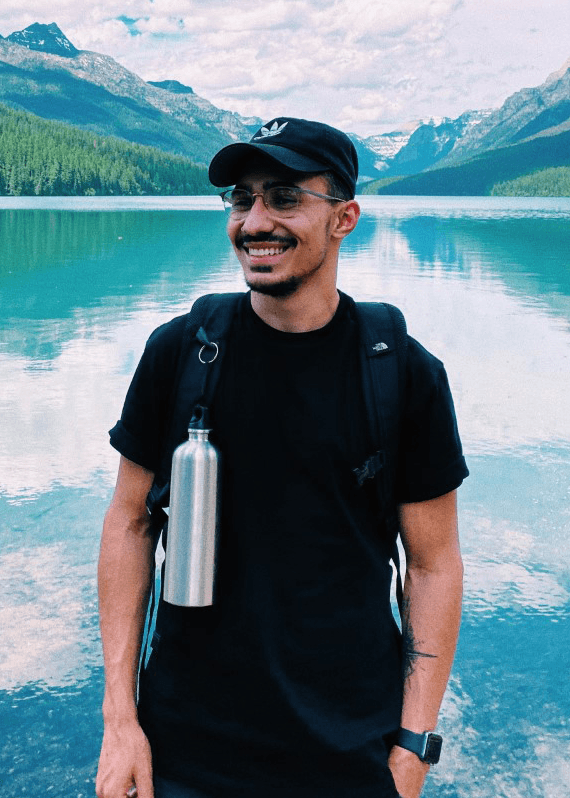
Vitor Moreira Da Silva
“I wasn’t sure if I wanted to go to University. I was thinking about joining the military, but I ended up changing my mind, and said, maybe I need a better education to go somewhere in life. Education is a door for opportunities. I have a friend who went to WSU, and she showed me some pictures of the campus. I fell in love with the vibe WSU has and ended up coming here.”
Passport to College is a program which helps students who have experienced Foster Care or Homelessness by providing financial aid at the beginning of each semester. It’s made a huge impact on Vitor’s life and college career.
“It’s been financially difficult for me, especially in college. I was paying for school through WASFA, and on the WASFA application, it asked if I was in foster care. Then I got an email from a Passport to College program member from Wazzu.”
“I don’t think I would be at WSU today without Passport to College. This is my second year and a lot of things have happened. I lost my job at WSU because of Covid, and the $1000 I get every semester from Passport to College is what’s helping me stay here and pay rent. My side job isn’t enough, and having that support is very helpful.”
“It’s a comfort to know that I won’t become homeless, because I have Passport to College to fall back on.”
Passport to College students also have access to advising services.
“I had questions about choosing between international business and computer science. I had a meeting with the advisor and she helped me research both fields, so I could come up with the answer myself.”
“I chose international business because I love traveling, experiencing new things, working with different cultures, and language. I like how nations communicate with each other and how their cultures impact business decisions.”

Calvin Baze
“A lot of my teachers from high school and a basketball coach that I’m close to went to WSU. They recommended WSU because it has a good community and a small town feel, but a lot of people, so you can experience different cultures. They said it would be a good fit for me, because I come from a small town.”
“Honestly, I didn’t even know what Passport to College was until I got put in it. When I first joined, I had the mindset that it was gonna be kinda lame, because that stigma of, ‘oh I was in foster care, so I’m probably going to be surrounded by people who think I’m not going to be successful, because I was put into a bad situation in life.’ I just wanted to be treated like everyone else. But of course, it’s actually super helpful, and Priya is great.”
Passport to College students take part in a UNIV class. During Covid-19, the class has been switched to an online format.
“Our class is like a home base. It’s super chill and we’re like a little family. We all know each other and chat together, and it’s honestly one of my favorite classes because everyone has their cameras on. It’s comforting to go in there with Covid right now, because we don’t get to talk to too many people in class.”
“Every Friday we have a workshop where a specialist comes to video chat with us. We had a librarian, a stress management person, a resume builder person. The list goes on.”
“It definitely helps you be more comfortable at WSU and helps you understand that you have a lot of support around you. It opened a window for me with support systems, like the writing center, libraries, and they have a lot of grants that you can get if you need help.’
If you are unsure about joining Passport to College, here’s what Calvin has to say:
“Passport to College is a program where a small group of people unite and build a community and support system. They don’t treat you like a baby. They just want you to know the resources you have at WSU. College isn’t like high school, so there are so many options of support and people who specialize in everything. It’s a nice transition to college, basically.”
“Just knowing that if I were to slip and fall they would be there to pick me up is super comforting.”
Calvin is currently applying to be a human development TA. His dream is to own a gym and become a professional bodybuilder.
Give to Students in Need with the
Foster Youth and Formerly Homeless Support Fund
Former foster youth have great financial need, especially at this time. In this season of giving, please consider this fund that supports their academic needs such as books, laptops, and other academic supplies needed to fully participate in coursework.
Notice of Non-Discrimination
WSU does not discriminate and prohibits discrimination on the basis of sex, race, color, national origin, disability, age, religion, creed, genetic information, marital status, protected veteran/military status, or immigration or citizenship status in any education program or activity that it operates complaint with Title IX and other civil rights laws and regulations. Inquiries regarding Title IX, ADA, or other civil rights laws, as well as reports of discrimination can be directed to the Compliance and Civil Rights, WSU ADA Coordinator, or WSU Title IX Coordinator. More information on WSU’s policies and procedures to respond to discrimination and harassment are available here: Nondiscrimination statement.
Proudly Partnered with:
